
Nutrition
You're Not Weak-Willed — You're Stressed. Here's What's Actually Happening When You Reach for Snacks
Stress eating isn't a willpower problem. Learn why cravings spike under stress, and practical ways to manage emotional eating in daily life.
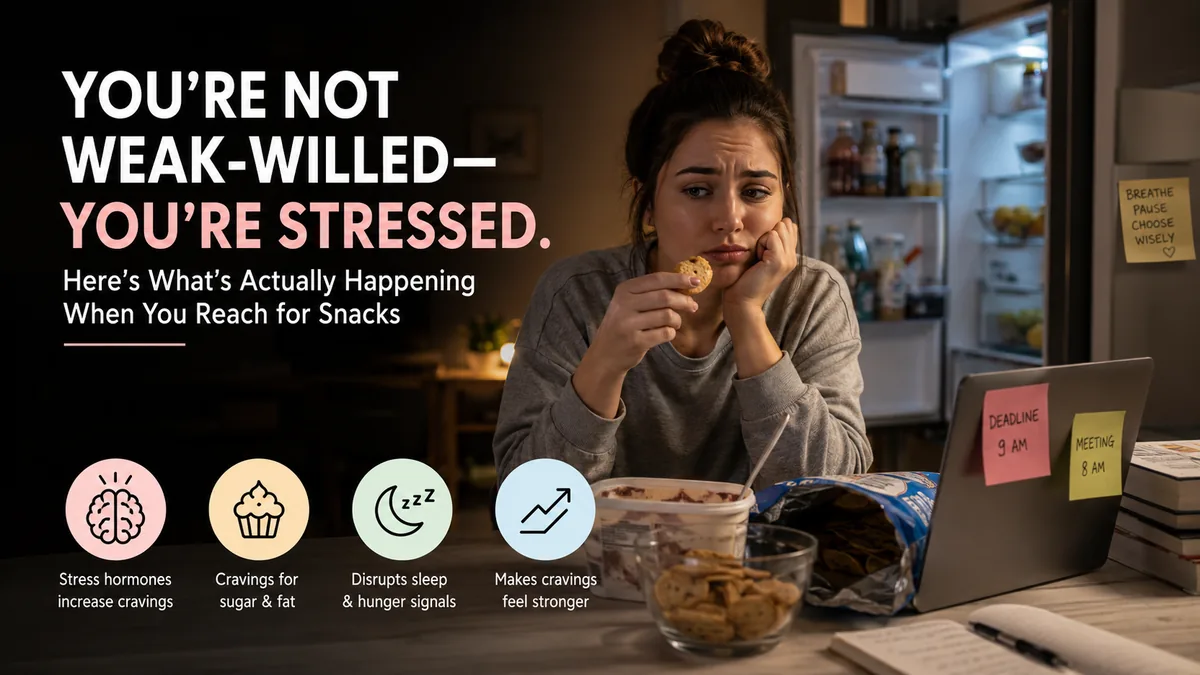
It's 11pm, the deadline is tomorrow, and somehow you're standing in front of the fridge for the third time tonight — not because you're hungry, but because something in your body wants relief. This isn't a discipline problem. It's biology, and understanding it is the first step to actually managing it.
It's a physiological response, not a character flaw. Managing it works better through structure and awareness than through willpower alone.
Why stress specifically triggers cravings
When stress is frequent or ongoing, elevated cortisol can push the body toward seeking quick-energy foods — typically sugar and fat combinations — because they trigger a fast dopamine response that feels temporarily calming. This is sometimes called "emotional fitness" in current wellness conversations: recognising emotional signals early and responding with a structured technique instead of reacting automatically.
Common stress-eating triggers include:
- Late-night work deadlines
- Poor or irregular sleep
- Skipped meals earlier in the day, leaving you under-fuelled by evening
- Boredom or loneliness disguised as hunger
- Habitual snacking tied to a location, like your desk or the TV
How to tell stress eating from real hunger
| Real hunger | Stress or emotional eating |
|---|---|
| Builds gradually | Comes on suddenly |
| Open to different foods | Craves one specific food |
| Stops when satisfied | Continues past fullness |
| No guilt afterward | Often followed by guilt |
Practical ways to manage it
1. Don't skip meals earlier in the day
Under-eating during the day makes evening cravings stronger. Keep meals reasonably consistent, with adequate protein, so you're not arriving at stress already under-fuelled.
2. Add a pause before snacking
A five-minute pause — a short walk, a glass of water, texting a friend — gives the initial craving spike time to settle before you decide.
3. Keep one planned "release" snack
Instead of banning snacks entirely, keep a reasonable, planned option on hand (fruit, roasted chana, curd). This reduces the all-or-nothing swing between restriction and overeating.
4. Address the actual stressor when possible
Journaling, a short walk, or simply naming the stress ("I'm anxious about tomorrow's deadline") can reduce the urge to eat it away, even briefly.
5. Track patterns, not just calories
Noticing that cravings spike specifically on low-sleep nights or high-workload days helps you plan around it, rather than being surprised by it each time.
The bottom line
Stress eating is a real physiological response, not a lack of discipline. You can't always remove the stress, but you can build small buffers — steady meals, a pause before snacking, and a planned option — that make the response easier to manage when it shows up.
Use Eleviy to log meals and notice your own patterns around stress, sleep and cravings over time.
This article is for general education and is not personalised medical or psychological advice. People with disordered eating patterns should seek support from a qualified healthcare professional.