
Nutrition
Japanese Walking: The 30-Minute Walk Everyone Is Suddenly Talking About
Japanese walking (interval walking training) is trending worldwide. Learn what it is, why it may beat 10,000 steps, and how to try it in India.
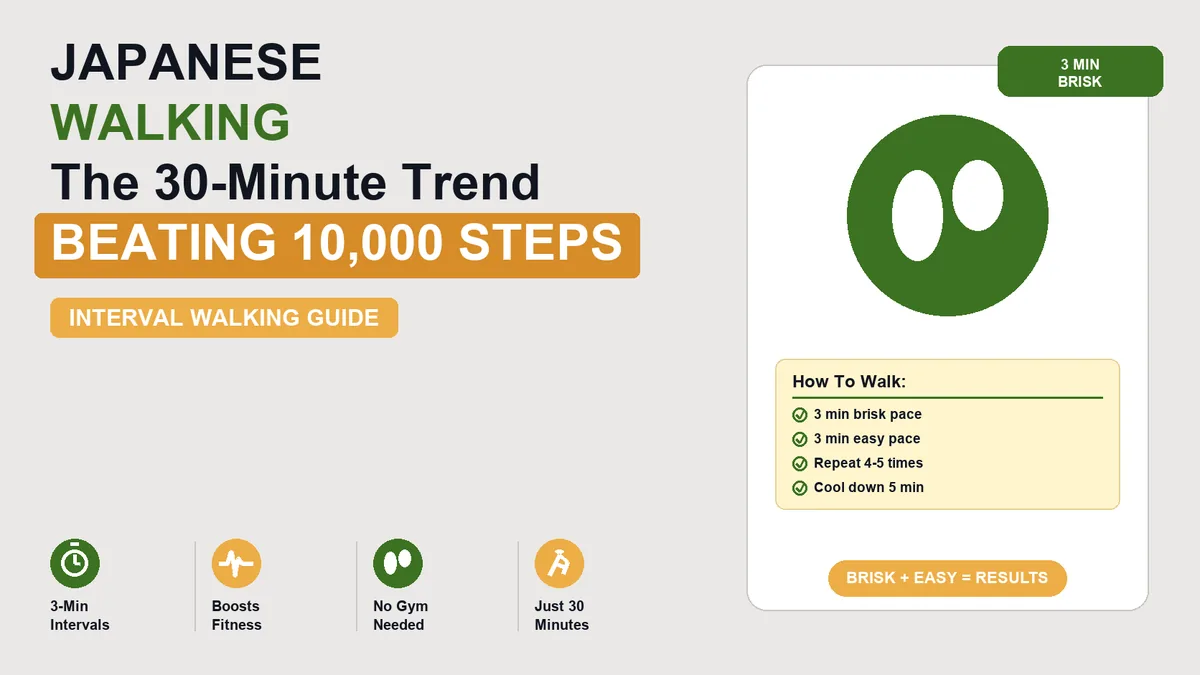
A daily habit that started as a small Japanese university study has turned into one of the fastest-growing fitness searches of 2026, with interest jumping by more than 2,900% in a single year. No gym, no equipment, no subscription. Just a different way of walking around your own block.
Research from Japan's Shinshu University found that this interval pattern improved cardiovascular fitness, blood pressure and leg strength in middle-aged and older adults more than walking at a single steady pace for the same duration. (Shinshu University research)
Why is it trending now?
Step-count culture has dominated fitness advice for years, with 10,000 steps treated as an unofficial gold standard. Japanese walking offers something different: a time-based, intensity-based method that doesn't require tracking steps at all — just a phone timer.
It fits people who:
- Have 20–30 minutes but not a full workout session
- Find flat, steady walking mentally boring
- Want a cardiovascular challenge without running or gym equipment
- Are managing blood pressure, blood sugar or early fitness goals
How to try it today
- Warm up with 3–5 minutes of normal-paced walking.
- Brisk interval (3 minutes): Walk fast enough that talking becomes effortful — roughly a 6 or 7 out of 10 effort.
- Easy interval (3 minutes): Slow down to a comfortable, recovery pace.
- Repeat the brisk/easy cycle four or five times.
- Cool down for 3–5 minutes at an easy pace.
This fits well into an early-morning walk before Indian summer heat sets in, a post-dinner walk around a housing colony, or a treadmill session at incline.
Does it replace strength training?
No. Japanese walking is a cardiovascular habit, not a full fitness plan. It works well alongside — not instead of — resistance training for muscle and bone health, and a protein-adequate diet for recovery.
The bottom line
You don't need a new gadget or app to start. Pick a route, set a 3-minute timer, and alternate brisk and easy walking for half an hour. Track how your effort and recovery pace feel over a few weeks — that trend matters more than any single walk.
Use Eleviy to log your walks alongside your meals and see how consistent movement and nutrition work together over time.
This article is for general education and is not personalised medical advice. People with heart conditions, joint issues or other health concerns should consult a doctor before starting a new exercise pattern.