
Nutrition
Are Protein Bars Actually Healthy? What the Wrapper Doesn't Tell You
Protein bars are everywhere in India right now. Learn what to check on the label, common marketing traps, and when a bar is actually worth it.
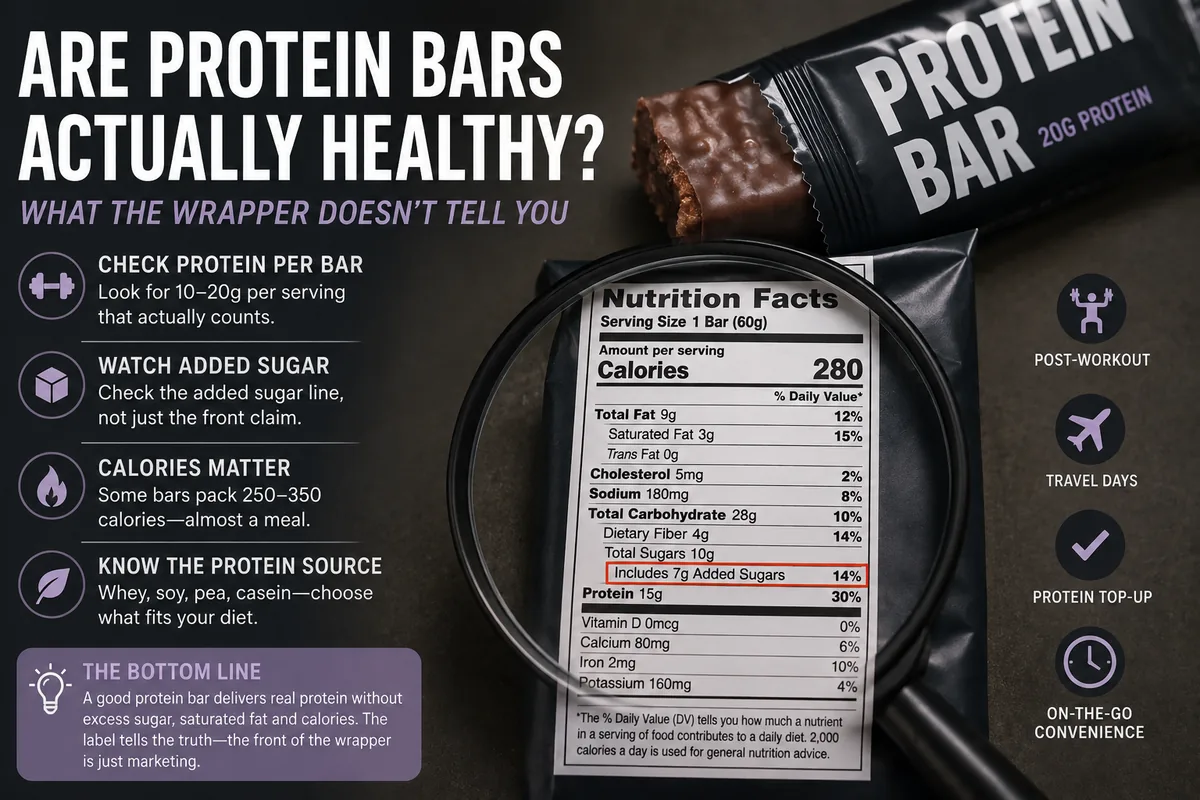
Walk into any Indian supermarket or scroll any fitness page today and you'll see it: a wall of protein bars promising 20 grams of protein, "guilt-free" chocolate, and zero added sugar. Some of that is true. A lot of it is clever formatting. Here's how to tell the difference in under a minute.
The label tells the real story. The marketing on the front rarely does.
What to actually check on the label
1. Protein per bar, not per 100g
Brands sometimes highlight the protein-per-100g figure because it looks bigger. What matters is the protein in the actual bar you're eating — look for 10–20g of protein per serving for it to meaningfully count toward your daily target.
2. Added sugar
Some bars use sugar alcohols or fibre syrups to hit a "low sugar" claim while still tasting sweet. Check the total carbohydrate and added sugar line, not just the front-of-pack claim.
3. Calories per bar
A bar advertised as a snack can carry 250–350 calories — close to a small meal. If you're using it to replace a proper meal, that's fine. If you're eating it as an extra snack on top of your normal meals, it can quietly work against a calorie deficit.
4. The protein source
Whey, soy, pea and casein are common sources. Vegetarian and vegan bars increasingly use pea or soy protein — check this matches your dietary preference, not just the "high protein" badge.
When a protein bar is genuinely useful
- Post-workout when a full meal isn't practical for a few hours
- Travel days when Indian meal options are limited
- A quick top-up when your day's protein is falling short
- An easy way to hit a protein target without cooking
When whole food is the better choice
- At home, where paneer, curd, eggs, dal or roasted chana can deliver similar or better protein for less cost
- When a bar is being used to replace vegetables, fibre and micronutrients from real meals
- When the "high protein" bar is actually closer to a chocolate bar in sugar and fat
The bottom line
A protein bar isn't automatically healthy just because it says "high protein" on the front. Flip it over. Check protein per bar, added sugar and total calories before deciding if it earns a place in your day — and don't let a convenient snack quietly replace the whole foods doing most of the nutritional work.
Use Eleviy to scan packaged snacks and compare their real protein, sugar and calorie numbers before you decide.
This article is for general education and is not personalised dietary advice. People with diabetes or specific dietary restrictions should check labels carefully and consult a qualified professional.